Custom ERP Software
Where ERP Software earns its keep in a manufacturing business: joined-up processes, real-time data, lower costs, better teamwork and a system that grows with the plant.
Published
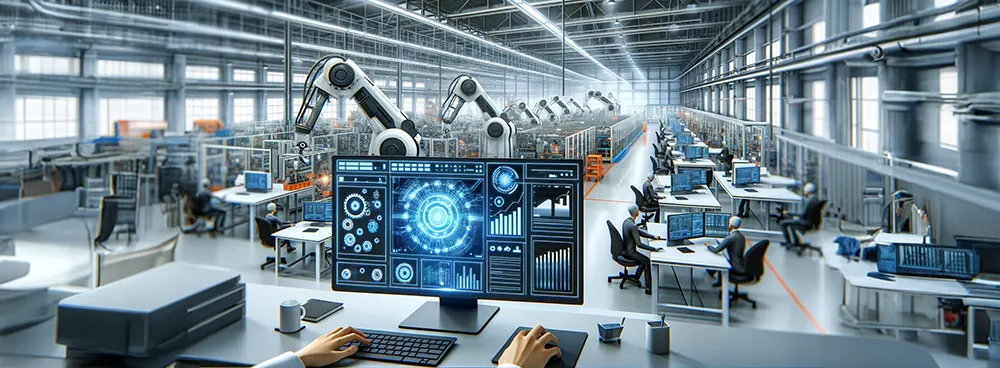
ERP for manufacturing is one system that connects inventory, materials, production scheduling, quality control and finance, so every department works from the same live figures. Have you considered how ERP Software could change the way your plant operates?
Run well, it ties procurement, production and delivery into one operation, and it changes how quickly and how well decisions get made. If the basics are new, start with what an ERP System is and how it works.
Key takeaways at a glance
| Key takeaway | What it means for you |
|---|---|
| Integrated processes | ERP Software brings every part of manufacturing together, from inventory management to production planning. |
| Real-time data | Instant access to critical data improves decision-making and day-to-day efficiency. |
| Lower operating costs | Better use of materials, people and energy cuts operational costs significantly. |
| Better collaboration | Departments communicate through one system, which lifts productivity across the business. |
| Scalability | The system grows with the business, supporting expansion and diversification. |
Swipe to see the whole table

Picture a plant where every process, from procurement to delivery, runs like a well-oiled machine.
Tracking inventory becomes easy: no more overstocking or understocking, just the right stock at the right time.
Production is planned so that resources are fully used and downtime is kept to a minimum.
Consistent, high quality standards are held at every stage of production.
A well-run supply chain, with raw materials arriving and finished products leaving on time.
Real-time data is like a crystal ball showing exactly what is happening in your factory.
With live figures in front of them, manufacturers forecast demand more accurately and plan production around it.
Immediate visibility into every process means a bottleneck is spotted early and resolved quickly.
Expenses and revenue are tracked in real time, which keeps the finances healthy.

ERP Software is a potent cost cutter, like a financial adviser always looking to save you money.
In manufacturing, departments must play like a well-rehearsed orchestra, and ERP Software keeps every section in tune.
Data is held in one place and open to every department, so no information gets stuck in a silo.

Workflows are coordinated across departments, keeping production, stores, sales and finance aligned on common goals.

The most exciting aspect of ERP Software in manufacturing is its scalability: think of a business suit that magically adjusts as your company grows. Whether you add new production lines or expand into new markets, it scales up to meet the increasing demand.
That is what makes ERP a long-term solution for a manufacturer.
Amid the technicalities of ERP, do not overlook the people who will use it. Employees go on a journey from scepticism to confidence as they learn how the system makes their jobs easier and more productive.
Training and change management are key components of a successful ERP implementation.

ERP Software is not just another tool in manufacturing; it is a strategic partner that drives efficiency, growth and sustainability. Start with the process that costs your plant the most today, whether that is stock, scheduling or quality, and judge any system by how well it carries that.
At Episcript, we take the time to understand your manufacturing processes and tailor custom ERP Software to your unique needs, and our solutions are eligible for government grants.
ERP Software for manufacturing is one system that runs sales orders, bills of materials, stock, purchasing, production scheduling, quality control and costing from shared records. Every department works from the same live figures instead of separate spreadsheets.
MRP is not the same as ERP: material requirements planning is usually one module within it. MRP works out what to make or buy from open orders, stock and supplier lead times, while ERP runs sales, production, quality and finance.
ERP Software improves manufacturing efficiency by integrating processes, providing real-time data and streamlining workflows. Inventory, production scheduling, quality control and the supply chain run from one system, with every department working from the same data.
ERP Software is designed to grow with your business, taking on new processes and increasing demand. Whether you add new production lines or expand into new markets, the system scales up to meet them.
Episcript analyses your specific manufacturing processes and customises the ERP System to fit your needs, from inventory and production scheduling to quality control and the supply chain. Our solutions are eligible for government grants.
ERP Systems bring significant cost savings by optimising resource use, reducing waste and improving process efficiency. More efficient processes often cut energy consumption too, which is good for the wallet and for the planet.
By providing real-time, accurate data, ERP Software lets manufacturers make informed decisions quickly, improving responsiveness and competitiveness. It also sharpens demand forecasts and shows bottlenecks early enough to resolve them.
Training and change management are key to a successful ERP implementation. Employees move from scepticism to confidence as they learn how the system makes their jobs easier and more productive.
Sales, order processing, procurement, inventory, customers and accounting in one system built to your processes.